Most founders launching a fashion brand online start with the website. It is the most visible part of the launch, the easiest to brief and the one that feels most like progress: a domain is bought, a theme is chosen, a designer is found, and within weeks there is something to show investors, friends and early customers. The website is where the brand will meet most of its customers, and a founder who has spent a year on product wants to see it presented somewhere that feels real.
The website is the last decision in launching a fashion brand online, not the first. It expresses a set of prior decisions about who the brand is for, what it sells, how the product is photographed and what visual system holds it together. When those decisions are made first, the site is quick to build and coherent on arrival. When the site comes first, it is built on guesses, and every guess is later revisited at greater cost. The order is positioning, then product and photography, then system, then site.
This is not an argument for delaying a launch until everything is perfect. A brand learns more from its first season of real customers than from any amount of planning, and a considered launch site is a tool for that learning. The argument concerns sequence: making the inexpensive decisions before the expensive ones, so the site records conclusions rather than questions. Helping new brands work through that sequence is a large part of what Design & Build Co. does with founders before any page is designed.
This article examines why the website is the last decision in a fashion launch, why positioning comes before pixels, how photography sets the ceiling for everything that follows, what to weigh when choosing the platform and its limits, the minimum a launch site needs on day one, and what to leave until after launch. It closes with five principles for launching a fashion brand online.
Why the Website Is the Last Decision
A website is a container for decisions. Its navigation encodes how the brand thinks about its range; its product pages encode what the brand believes a customer needs to know before paying. None of these can be decided well on the website itself. They are decided in the brand, the product and the photography, and the site makes them visible. A founder who starts with the site is asking a designer to settle questions the brand has not answered.
The cost of the reverse order is concrete. A site designed before the photography exists is designed around placeholder images, and the layouts that look strong with stock imagery rarely suit the real shoot. A navigation planned before the range is final carries categories the brand never fills. A type system chosen before the positioning is settled sends a signal the brand later wants to retract. Each mismatch is fixed eventually, usually after launch and at a cost far higher than doing it in order.
There is a commercial argument too. A fashion brand's first customers form its first cohort, and the composition of that cohort shapes the brand for years: what it is known for, who recommends it, which price points feel credible. A site that launches with a clear position attracts customers who fit it. A site that launches with a vague one attracts whoever happens to arrive, and the brand then spends its second year trying to reach the customers it intended to serve in its first. Sequence is not a matter of tidiness; it decides who the brand ends up selling to.
Positioning Before Pixels
Positioning is the decision every other decision depends on. It answers who the customer is, what the brand offers that customer that nobody else does, where it sits on price, and what it will refuse to do. For a fashion brand the last of these matters as much as the first. A brand that will not discount, will not chase trends or will not sell beyond a certain range has made decisions that shape its site as much as its product: the absence of sale banners, the pacing of new arrivals, the depth of the catalogue.
Positioning work is often treated as a branding exercise that ends with a logo. For an eCommerce launch it needs to go further and reach the practical questions the site will ask. How much does the customer need to know about fabric and construction before buying? Does the brand sell individual pieces or complete looks? Is the founder's story part of the proposition or a footnote? Each answer translates directly into page structure, and a brand that has not answered them hands the decisions to whoever builds the site.
Many successful fashion brands launched with thin positioning and found their footing through customers; a strong product and a sharp eye can carry a brand a long way. But those brands usually rebuilt their site within a year or two, once they knew who they were. Positioning first does not prevent learning; it gives the learning something to correct. A brand with a clear hypothesis can see where customers confirm or contradict it. A brand without one sees only noise, and makes its next decisions on instinct again.
For premium and luxury fashion, positioning also governs restraint. The site of a brand that intends to command full price behaves differently from the site of a brand that competes on value, and that difference begins in what the brand chooses to show and withhold. We have written about how premium brands pace disclosure to build desire; the principle starts here, in deciding what kind of brand this is, long before a page is designed. A launch site cannot be more certain than the brand it presents.
"A founder who starts with the site is asking a designer to settle questions the brand has not answered."
Photography Sets the Ceiling
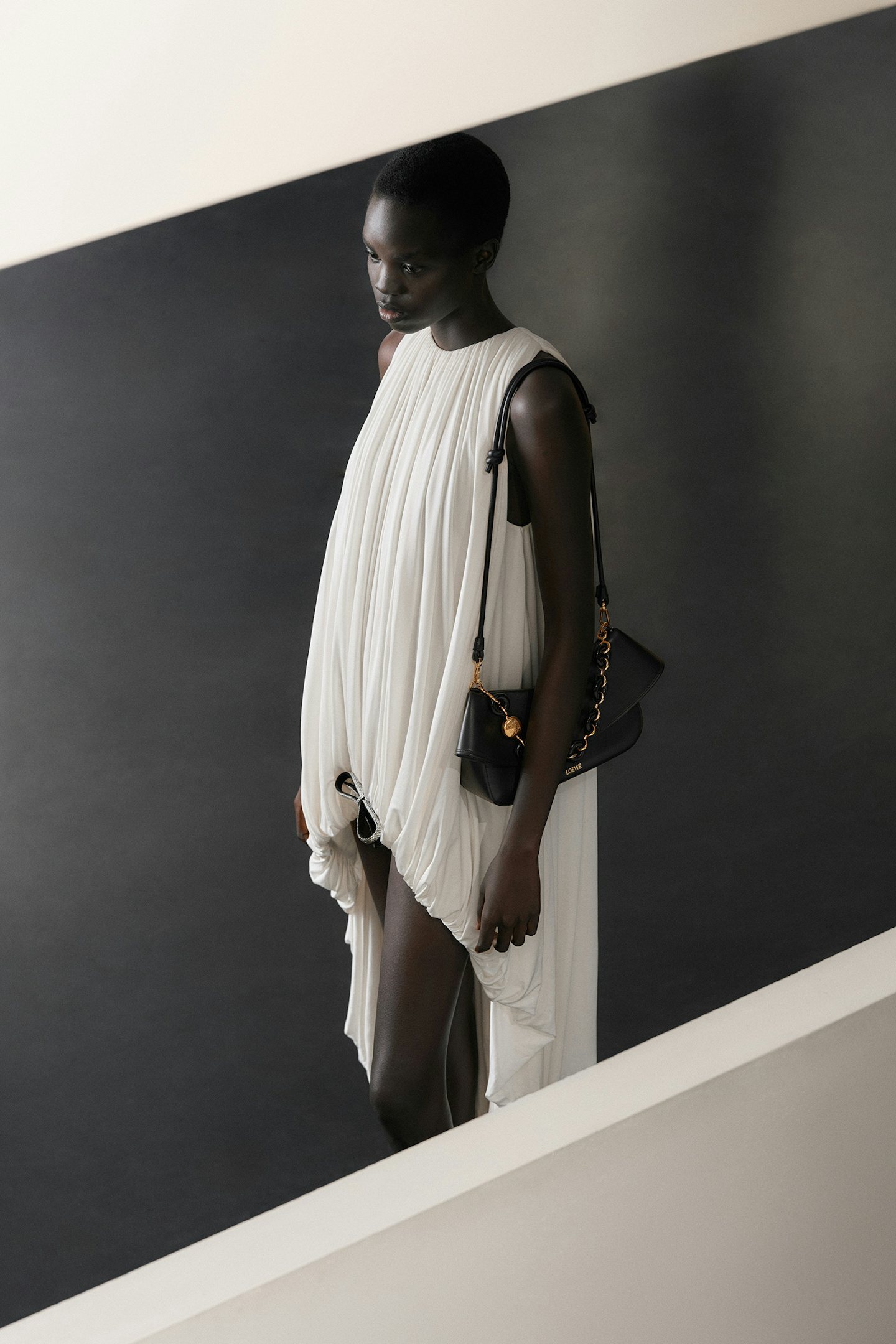
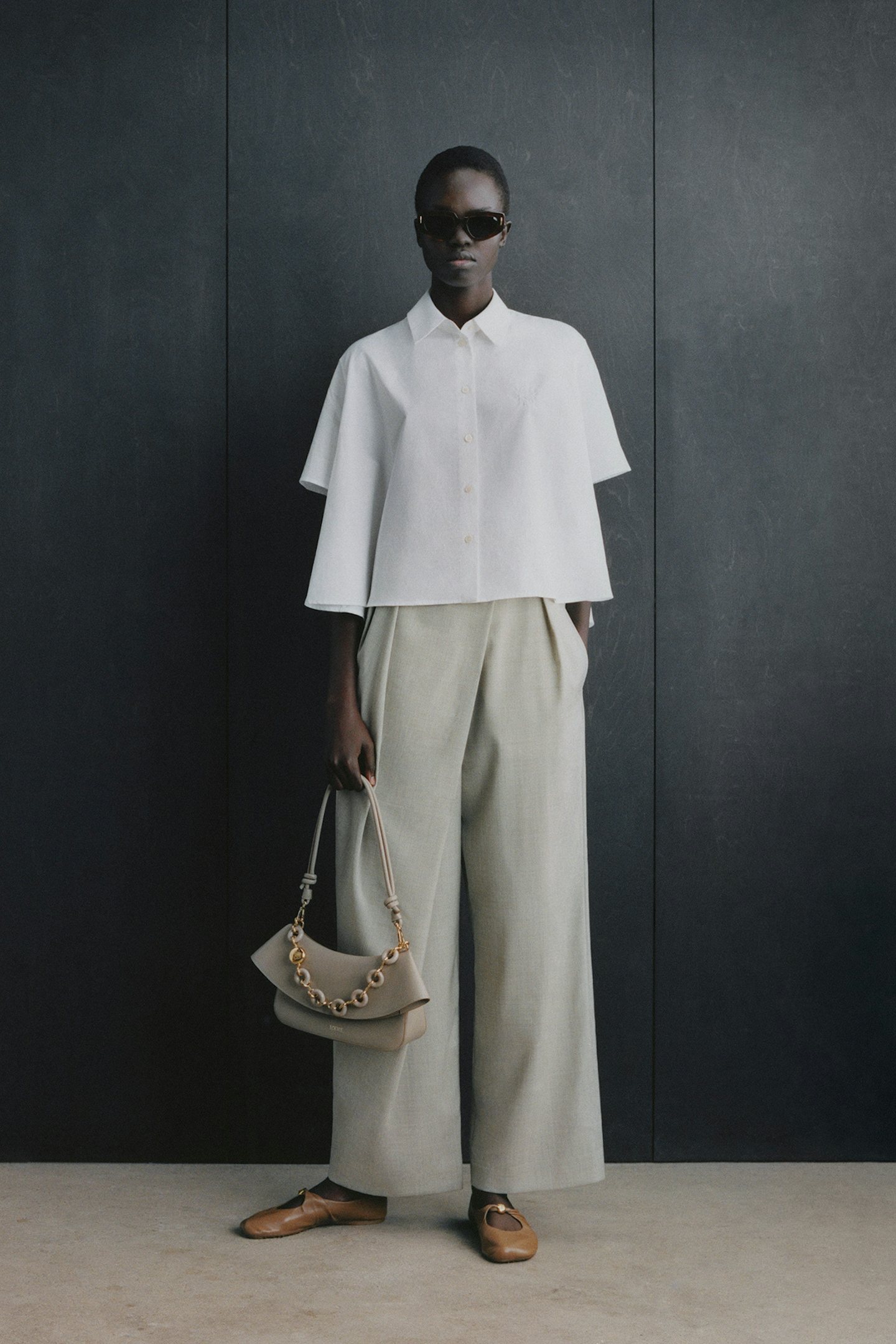
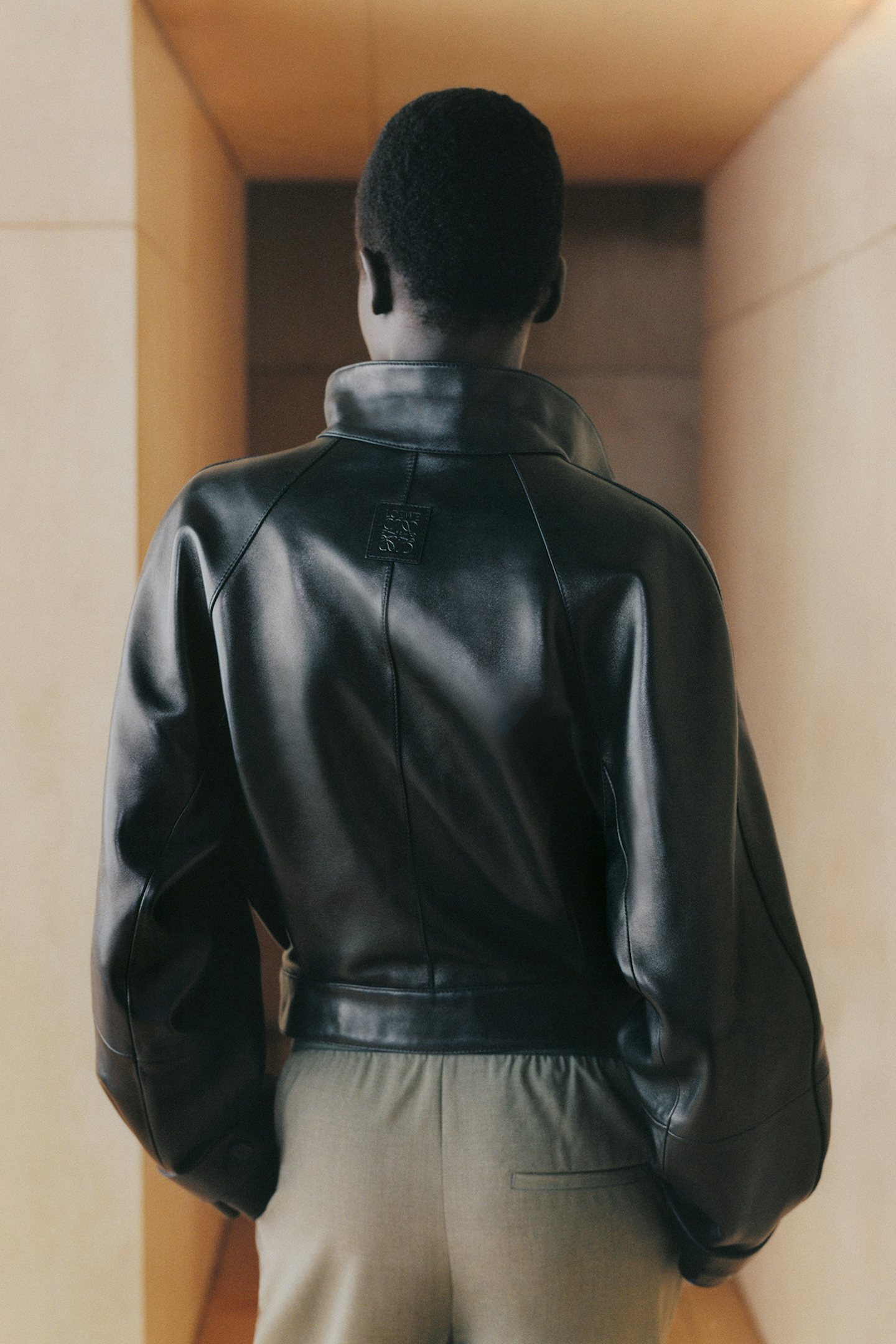
In fashion eCommerce, photography is the product for most of the customer's journey. The customer cannot touch the fabric, check the weight of the drape or see the colour in daylight; they see what the camera shows them, and they judge the brand by it. No amount of design can lift a site above the quality of its imagery. A beautifully considered layout with weak photography looks like an expensive frame around a poor print, and customers read the gap as a signal about the product itself.
What does a new fashion brand need before building a website?
A new fashion brand needs four things before building a website: clear positioning, a finalised first range, strong photography of that range and a basic visual system. Positioning tells the site who it is for. The final range sets the navigation and catalogue structure. Photography, both product and campaign, sets the ceiling for how premium the site can look and is the single input most often underestimated. A style guide covering typography, colour and imagery direction lets the site be built quickly and consistently. Product copy and policies should be drafted before build begins.
The practical consequence is that photography should be planned with the site in mind. Product images need consistent framing, lighting and background so the collection grid reads as a set rather than a collage. Campaign imagery needs formats that work in portrait on a phone as well as landscape on a desktop. Detail shots need to show what the positioning claims: the finish of a seam, the hardware on a bag. A shoot briefed without this knowledge produces beautiful images the site cannot use well.
This is why photography belongs in the launch plan from the start, not after the site is built. A brand that arrives with a finished shoot can have a considered site in weeks, because the most important input is already settled and the design can respond to real images rather than guessing at them. A brand that arrives without one is not ready to build, however urgent the launch date feels. The site waits on the photography either way; the only question is whether the founder plans for that or discovers it halfway through the build. We set out what has to be true for a fast fashion launch in a companion piece.
Photography also sets the register for everything around it. The typography, spacing and colour of a site should be chosen in response to the imagery, not the other way round. A shoot with warm, grainy, film-like images asks for a different type system from one with crisp studio light on a white ground. When the style guide is built after the photography, the two belong together. When it is built before, the founder often finds that the site and the images speak in slightly different voices, and no customer can quite say why the brand feels uncertain.
Choosing the Platform and Its Limits
For most new fashion brands, the platform decision is simpler than it appears. Shopify carries the commercial essentials a fashion brand needs at launch: product variants for size and colour, inventory, checkout, payments, tax and international selling, all maintained by the platform rather than by the brand. Months spent comparing platforms are usually better spent on positioning and photography, where the brand's differentiation lies.
Is Shopify the right platform for a new fashion brand?
Shopify is the right platform for most new fashion brands, because it handles the commercial essentials reliably and lets the brand spend its effort on positioning, product and photography. It supports variants for size and colour, international selling, strong checkout performance and a large ecosystem of themes and apps. A premium theme, configured from a considered style guide, can give a new brand a site that looks bespoke without bespoke cost. Brands with unusual functionality, such as complex made-to-order configuration, should test those needs before committing.
The limits are worth knowing in advance. A theme defines the shape of the site, and while a strong premium theme is flexible, it rewards brands that work with its architecture rather than against it. Custom sections extend what a theme can do, and the right ones make a site feel specific to its brand; but each addition is a cost, and a launch site should add only what the brand's positioning demands. The question to ask of any feature is whether it expresses something the brand stands for, or merely something another brand has.
Apps are the other limit. The Shopify ecosystem makes it easy to add reviews, loyalty schemes, pop-ups, upsells and quizzes in an afternoon, and new brands frequently do. Each app adds weight to the page and a visual style the brand did not choose. For a premium brand, most of these tools solve problems it does not yet have, and a launch site is stronger for what it leaves out.
When the brand outgrows the launch site, the platform does not need to change. Shopify scales from a first collection to a multi-market business, with Shopify Plus for when volume justifies it. What changes is the site's design, which moves from a configured system toward bespoke work as the brand gathers evidence about its customers. That progression is the right one, and it starts with a platform the brand can grow within rather than one it will later need to leave.
The Minimum a Launch Site Needs
A launch site has one job: to present the brand clearly enough that the right customers buy, return and recommend it. That job needs fewer pages than most founders expect. A homepage that establishes the brand and leads into the collection; collection pages that present the range with the right pacing; product pages that sell the material and the making; a cart and checkout that feel as considered as the rest; an about page with something specific to say; and the practical pages for delivery, returns, sizing and contact.
What should a launch website include?
A launch website for a fashion brand should include a homepage, collection pages, product pages, cart, an about page and clear pages for delivery, returns, sizing and contact. Each should be built from one visual system, so the site feels coherent from the first visit. Product pages carry the most weight: strong imagery, precise copy on fabric, fit and care, and honest delivery information. A launch site does not need a blog, a lookbook archive, loyalty schemes or extensive apps. It needs to present the brand clearly and sell the first range well.
Product pages deserve the most care because they do the selling. For a fashion brand that means imagery from several angles, a detail shot of what makes the piece worth its price, fit guidance that a customer can trust, and copy that describes fabric, construction and care without falling into either jargon or cliché. What matters at launch is that every product page is complete, consistent and honest, because an incomplete product page is the clearest signal that a brand is not ready.
Consistency across the site matters more than any individual page. A beautiful homepage beside a neglected returns page tells the customer the brand cares about appearances more than service. A launch site built from one style guide, with every page using the same typography, spacing and image treatment, reads as a brand that knows what it is. That consistency is what makes a launch site feel premium, and it is far cheaper to achieve at the start than to retrofit later.
"A launch site is stronger for what it leaves out."
What to Leave Until After Launch
The temptation at launch is to build for the brand the founder hopes to become: a multi-market site with currency switching, a journal, a loyalty scheme, a lookbook archive, a styling quiz. Each has a place eventually. At launch, each is a guess about customer behaviour the brand has not yet observed, and each adds time to the build and weight to the site. The discipline is to launch with what the first range and the first customers need, and to add the rest as evidence arrives.
Bespoke design belongs in this category. A new brand does not yet know which pages will carry its revenue, how customers will navigate its range or what they will need to see before paying full price. A considered system on a proven theme gives it a strong site while it learns. Once there is a season or two of real data, bespoke design can be targeted at the places where it will earn its return; we set out that reasoning in bespoke or template. Spending heavily before then pays for design decisions made without evidence.
Conversion tools belong here too. Discount pop-ups, countdown timers and aggressive email capture can lift a first-purchase rate while attracting customers who wait for the next discount. For a brand intending to hold full price, the first cohort matters more than the first conversion rate, and brand trust as commercial bedrock is built by consistency from the first visit. Trust spent on a pop-up in the launch month is hard to earn back.
Finally, the founder should leave room to change their mind. The first season will reveal which products customers want, which photography works, which pages they use and where they hesitate. A launch site built from a clear system can absorb those lessons cheaply: a new section, a revised collection structure, a sharper product page template. A launch site built as a bespoke monument resists them. Many brands reach the premium plateau where DTC brands stall partly because their early decisions became too expensive to revisit.
Five Principles for Launching Online
How do I launch a fashion brand online?
To launch a fashion brand online, make the decisions in the order that each one depends on the last. Settle positioning first: who the brand is for, what it stands for and what price it commands. Then finalise the first range and photograph it to the standard the brand intends to hold. Then build a visual system, a style guide covering typography, colour, spacing and imagery direction. Only then build the site, on a platform such as Shopify, so it records decisions already made rather than guessing at them.
First, decide the position before anything visual. Who the brand is for, what it charges, and what it will not do are decisions that shape every page, and they are cheap to make on paper and expensive to change on a live site. A founder who can state the position in two sentences has given every later supplier a brief; one who cannot will find each supplier filling the gap with assumptions.
Second, treat photography as the most important launch investment. It sets the ceiling for how premium the site can look and it is the input most likely to delay a launch. Brief the shoot with the site in mind: consistent product framing, portrait-friendly campaign images, detail shots that prove the claims the brand makes. A brand with strong photography and a modest site will outperform one with a lavish site and weak images, because the customer judges the product by what the camera shows.
Third, build a system before building pages. A style guide covering typography, colour, spacing, buttons and imagery direction turns the positioning and photography into rules the site can follow. It makes the build faster, keeps every page consistent and gives the brand a reference for emails, packaging and future pages. It is the single document that lets a launch site be built in weeks rather than months without feeling assembled.
Fourth, launch with the minimum the first range needs and resist the rest. A homepage, collections, product pages, cart, about and the practical pages are enough. Every feature added before launch is a guess about customer behaviour, and every app is a cost in speed, consistency and money. A narrower site launches sooner, looks more considered and leaves the brand free to add what its customers turn out to need, with evidence rather than hope behind each addition.
Fifth, plan the second site from the first day. The launch site is a tool for learning, and its value lies partly in what it teaches about where bespoke investment will pay. Choose a platform the brand can grow within, keep the system clean enough to extend, and review the site after the first season with real data in hand. The brands that make the best second sites are the ones whose first site was built to be learned from.
At Design & Build Co. we help new brands make these decisions in order, from Brand Discovery and a Style Guide to a site built on that system. Brand-led Shopify design and build for premium fashion, beauty and lifestyle brands, and the Launch Programme, from £16,000, which brings the same taste and judgement to new and growing brands through our proprietary design system, in two to four weeks. If you are launching in this category, email info@designandbuild.co for an intro call and a demo.